
Tax Law Blog
- Posts by Nicholas J. Stock II
 Associate
Nick Stock has extensive knowledge and experience in U.S. federal and international tax planning, charitable and tax-exempt organizations, corporate and partnership law, securities, and contract drafting. Nick provides ...

Disclaimer: This summary states the federal law and relevant guidance regarding offers in compromise (OIC) as of the date of writing. It is designed to provide a practical overview but is not intended to be legal advice. Any tax controversy engagement, OIC or otherwise, requires careful review of the taxpayer’s transcripts, collection period, financial situation, filing history, levy and lien records, and facts bearing on liability or hardship, among other relevant facts and circumstances.
An offer in compromise is a contract under which the United States accepts less than the ...

This article discusses the application of Sections 280G and 4999 of the Internal Revenue Code and related treasury regulations (“IRC” or “Code”)[1], best practices, and alternative approaches to structuring and approving parachute payments in the context of a deferred compensation plan (“Plan”) for a privately held domestic company (“Company”)[2]. Assume a Plan such as a synthetic equity plan involving phantom stock to be paid in cash upon IRC 409A compliant payment events, substantially simplifying valuation issues noted below.
I. BACKGROUND
Section 280G ...

Certain payments constituting income require the payor to prepare, furnish, and file certain information statements and returns, both to the payee and to IRS, even when the payor is not the taxpayer whose income is being reported. These returns typically aid the recipient payee in calculating and reporting income in the relevant year and help IRS to identify unreported or underreported income by creating two potential sources of information, which should generally be consistent.
Most of the time, determining the appropriate 1099 or similar form is straightforward. Reporting ...

IRS has made a habit of challenging whether a member of a limited liability company that is treated as a partnership for tax purposes is materially participating in the activities of the partnership.
A recent Tax Court case (Strieby v. Commissioner) considers whether the passive activity credit limitation rules of Code Section 469 may prevent taxpayers from claiming energy credits allocated to them by virtue of their membership interests in a partnership.[1]
Facts Presented.
In Strieby, taxpayers invested in a solar farm but their only involvement consisted merely of completing ...
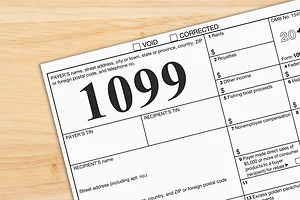
Brokers and their investor customers in digital assets should prepare, and tax professionals should prepare to assist, with reporting proceeds from certain digital asset transactions. See IRS FS-2025-06, Sept. 25, 2025.
The statements reflecting information reported on Form 1099-DA will differ from other information statements taxpayers receive because most of these statements will not provide basis information regarding a taxpayer’s digital asset transaction(s) for the 2025 tax year.
Taxpayers will need to calculate their basis before filing their 2025 tax return. For ...
On April 9, 2025, a Michigan man pleaded guilty to filing a false tax return for his international vehicle shipping business along with not paying taxes on cash wages he paid to his employees.[1]
According to court documents and statements, Ali Kassem Kain owned and operated a business called Specialized Overseas Shipping that arranged for vehicles to be shipped to West Africa and other destinations for third parties. For tax years 2017 through 2020, Kain underreported the company’s gross receipts by $6.4 million on the business’ tax returns. Kain also did not collect and pay over ...
